
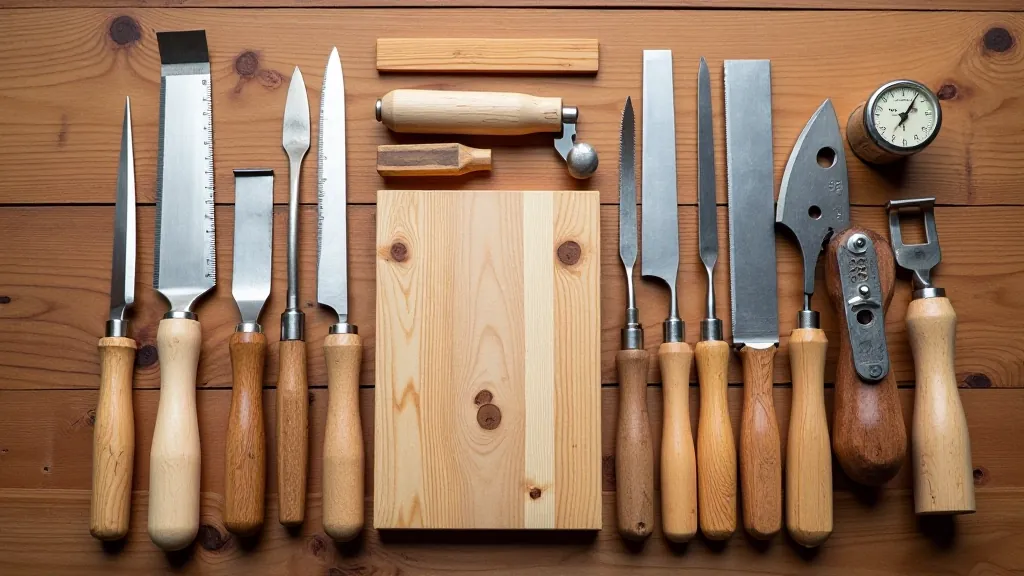
Essential Hand Tools Every Beginner Needs
A breakdown of the core tools — chisels, saws, planes, clamps — and why starting with quality basics matters more than quantity.
Making a small garage or country house work for woodworking. Workbench placement, tool storage, dust management, and keeping your space functional year-round
You don't need a fancy carpentry studio to start building. Most Latvian woodworkers begin in a garage, a corner of a barn, or a space in their country house. The difference between a frustrating workshop and one where you actually want to spend time? It's all about how you organize it.
We're talking about smart placement, proper storage, and handling the dust that comes with sawing wood. Get these fundamentals right from the start and you'll save yourself months of aggravation. You don't need to spend thousands of euros either — you'll learn to work with what you have.
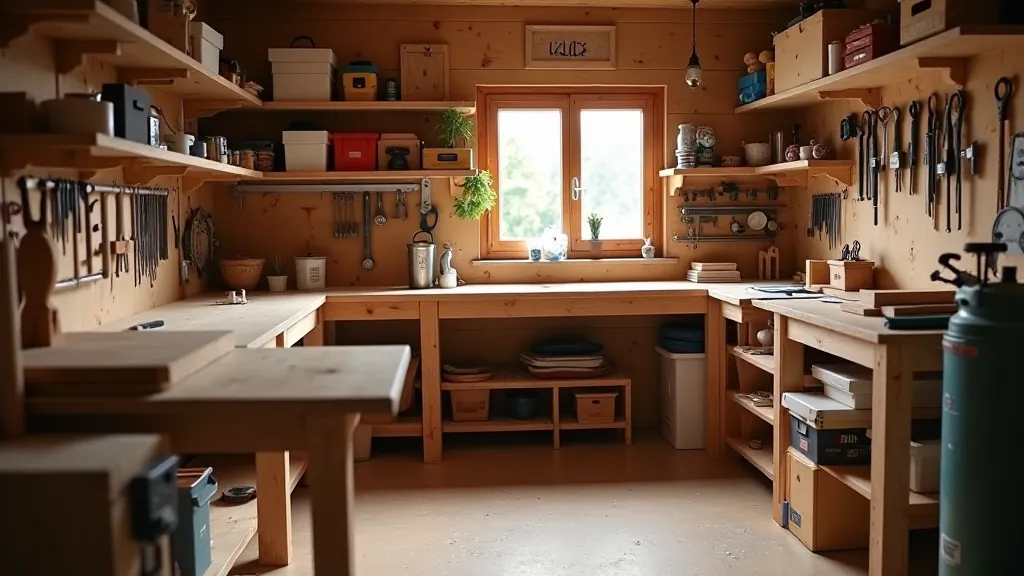

Location is everything. Don't just claim the corner where your car won't fit anyway. Choose a space that's dry, has reasonable light, and won't make your family miserable when you're working on a Saturday morning.
Most Latvian garages have concrete floors — good news because sawdust sweeps easier than from wood. Bad news? They're cold in winter and damp in spring. You'll want airflow without drafts that mess with wood. A single window's better than none. If your garage faces north, you'll struggle with natural light, so plan for a work lamp.
Don't underestimate humidity either. Wood moves when it absorbs moisture. If your workshop sits next to a cellar or stays wet, you'll have warping problems. Proper ventilation — even a simple extractor fan — makes a real difference. It's not glamorous but it works.
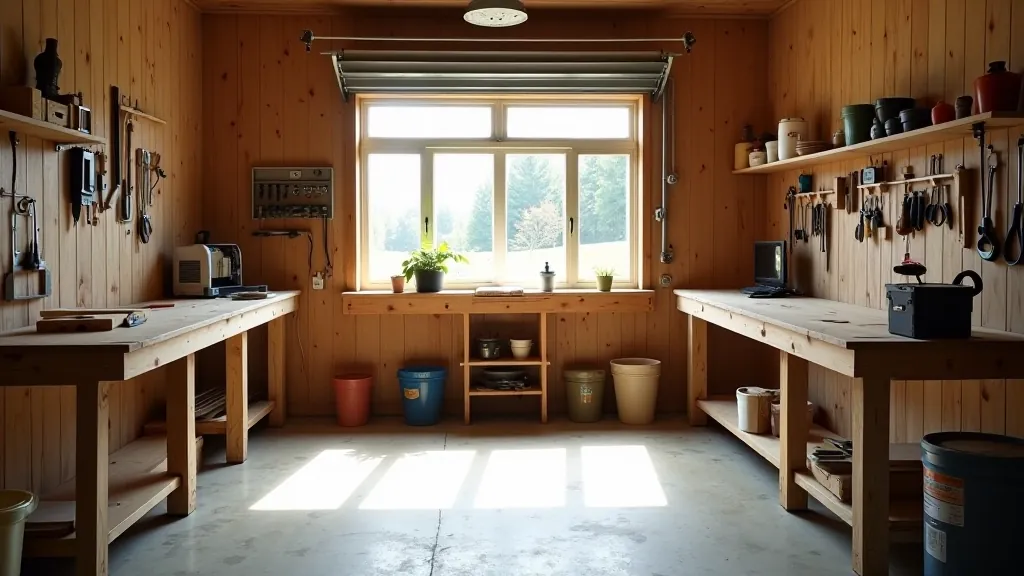
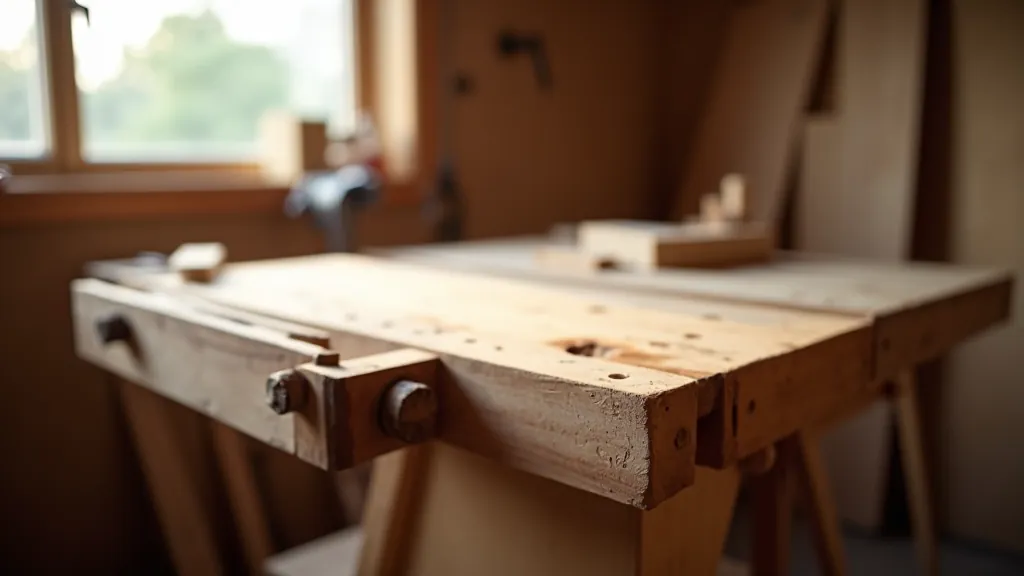
Your workbench is the anchor of everything. It's where you'll spend most of your time, so it needs to be solid and the right height. Most woodworkers work best at around 85-90 centimeters tall — roughly elbow height when your arms hang naturally. Too high and your shoulders ache. Too low and you're hunching over.
You don't need a fancy European bench to start. A sturdy table with a vise clamped to one end works fine for beginners. What matters is that it doesn't wobble. If your bench moves when you're sawing, you'll get frustrated fast. Heavy is good — at least 40-50 kilograms so it stays put.
Position it where you have light and space to work. If it's shoved in a corner, you'll constantly be moving it. Leave space on at least three sides so you can walk around your project. Doesn't sound important until you're trying to saw a board and you're wedged against a wall.
85-90 cm from floor to work surface
3 x 4 meters for basic woodworking
40-50 kg minimum for stability
At least 500 lux for detailed work
Here's what kills enthusiasm: spending 20 minutes finding a chisel because your tools are scattered everywhere. Smart storage isn't about buying expensive cabinets. It's about knowing where everything is and being able to reach it without moving three other things.
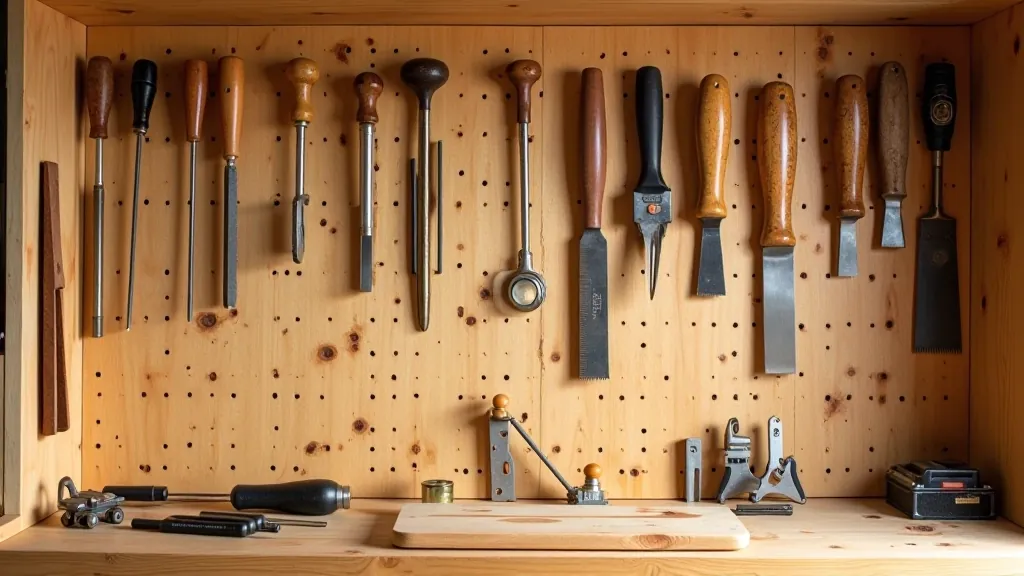
Wall space is your friend. Install a pegboard or simple shelving above your workbench. Hand tools — saws, chisels, planes — go where you can see them. This serves two purposes: you find what you need instantly, and you can actually see when something's dull and needs attention. A 120-centimeter pegboard costs around 30 euros and changes your whole workshop feel.
Larger tools like a miter box or clamps? Keep them on a lower shelf you can grab quickly. Don't stack things deep where you'll forget what's back there. One layer deep, always visible. It sounds obvious but most beginners cram everything in because they feel like they should use every inch. You won't. Your actual working space matters more than storage space.
This article provides educational information about setting up a home woodworking workshop. While we've shared practical approaches based on common workshop layouts, your specific situation — available space, climate, local building codes — will differ. Always verify local safety regulations before starting any workshop project. The techniques described here represent general best practices, not professional installation guidance.
You don't need perfection to start woodworking. You need a workbench that doesn't move, tools you can find, and enough space to work safely. That's it. The rest — the fancy dust collection, the climate-controlled shop, the thousand euros of equipment — that comes later when you know what you actually need.
This week, pick your location. Clean out the space. Build or find a sturdy workbench. Mount some wall storage. That's a functional workshop. Then grab a piece of wood and start learning. You'll figure out what needs adjustment once you're actually working, not by planning endlessly.